Date posted:
26/11/2026
10
| Read the article |On the morning of November 26, 2026, Hanoi Law University held a ceremony to launch the course “Gender and Gender Equality in Policy and Law”, alongside a seminar on teaching gender and gender equality in legal education. The event marked a practical step toward renewing teaching content and methods, strengthening law students’ ability to address gender-related issues, and supporting the 2026 Month of Action for Gender Equality and the Prevention of and Response to Gender-Based Violence.
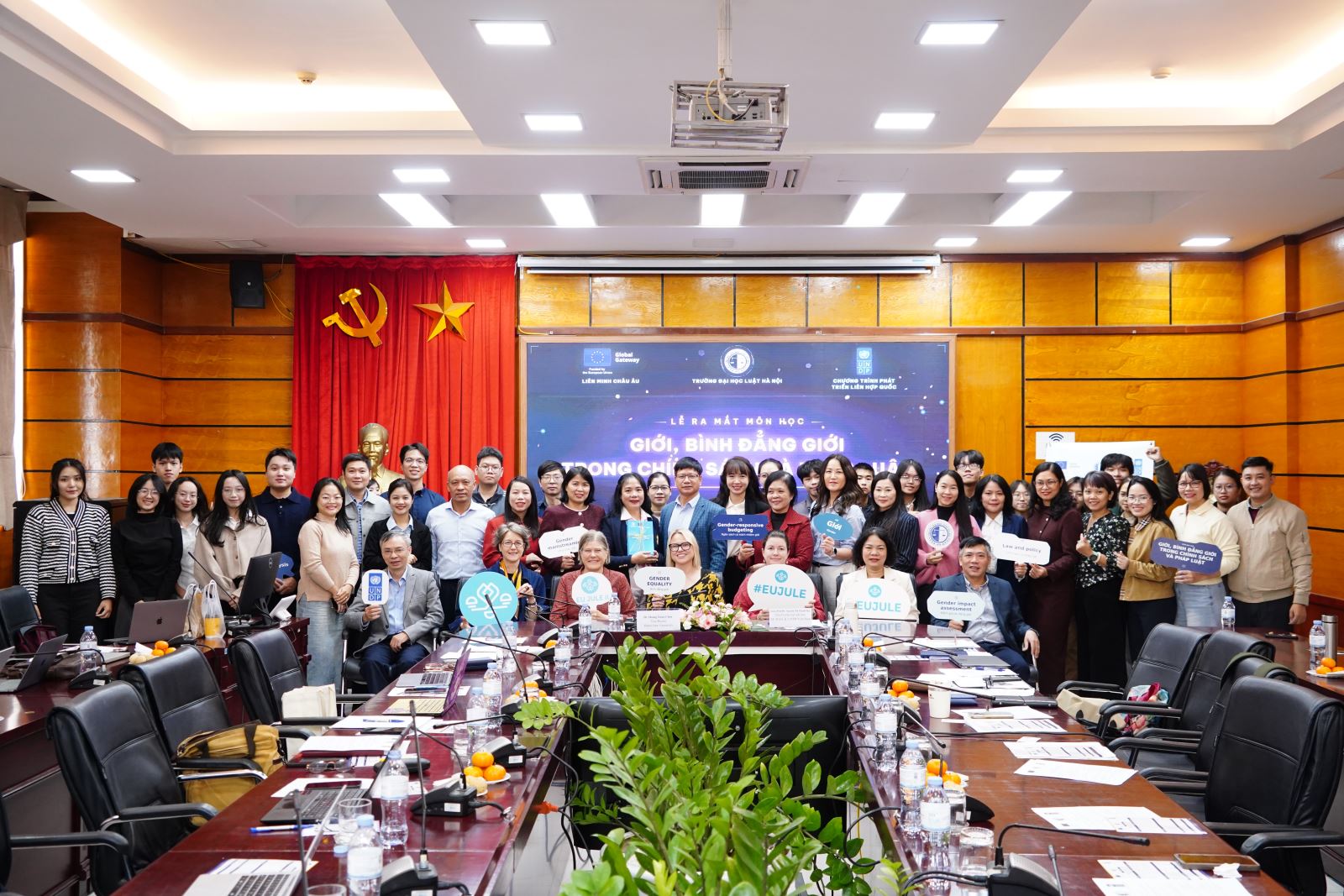
Delegates pose for a commemorative photograph at the course launch and seminar.
The event was attended by Dr. Hoang Xuan Chau, Vice Rector of Hanoi Law University; Assoc. Prof. Dr. Nguyen Thi Thanh Hai, Chief Advisor to the United Nations Development Programme (UNDP) in Viet Nam; representatives of the European Union (EU); and experts, lecturers and students of the University.
In his welcome remarks, Dr. Hoang Xuan Chau emphasized that gender equality is a fundamental human rights value and an important requirement in the development and improvement of the legal system. Incorporating gender and gender equality into the curriculum not only broadens students’ knowledge but also helps renew legal thinking and strengthen their ability to identify, analyze and address gender-related issues in legal research, lawmaking, application and enforcement.
Vice Rector Hoang Xuan Chau expressed the hope that the launch of the course would lay the foundation for the University to further integrate gender perspectives and approaches into other law courses, as well as into scientific research and international cooperation. He also expressed his appreciation for the support of the EU and UNDP and acknowledged the contributions of experts, lecturers from the Faculty of Civil Law and students to the development and pilot delivery of the course.
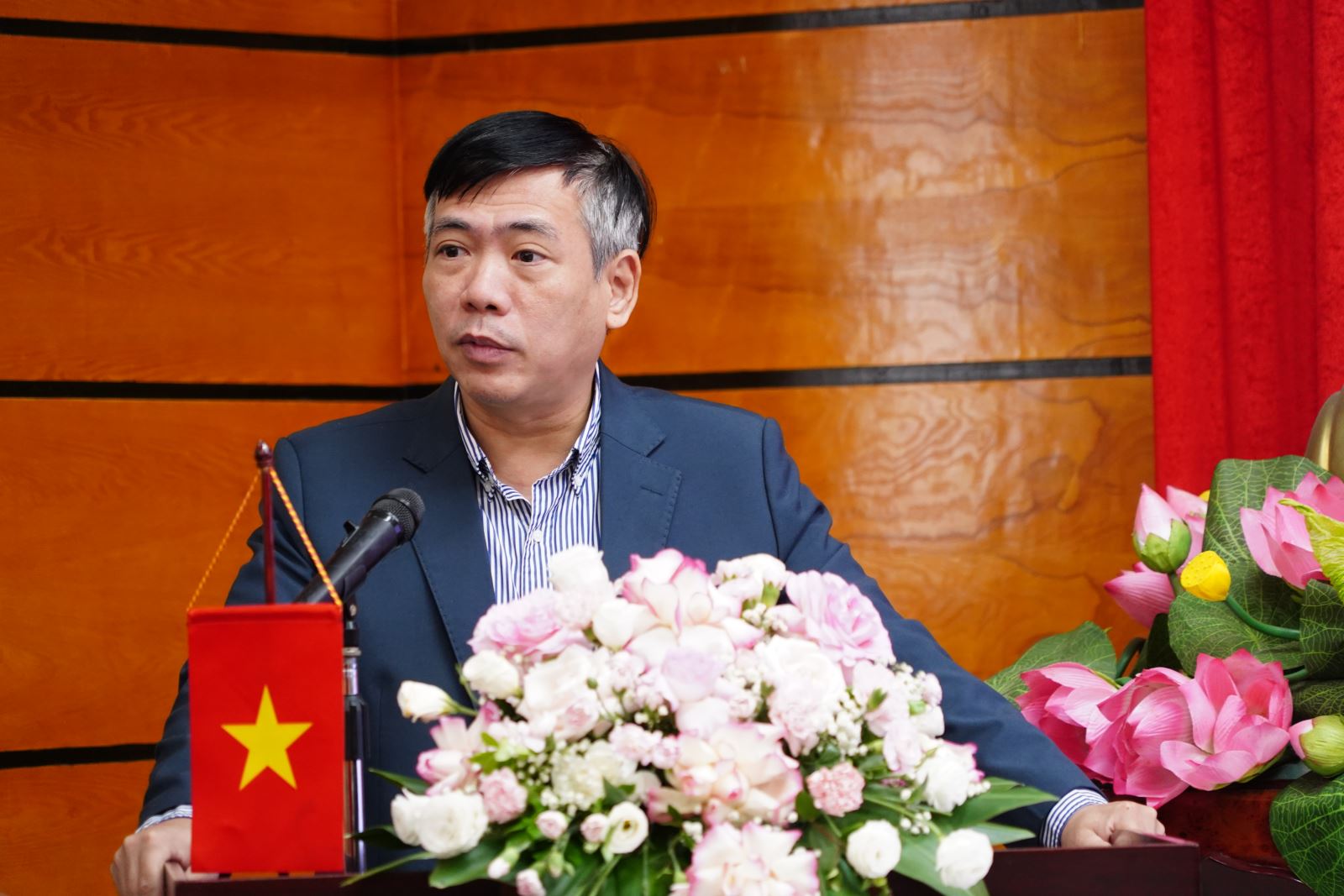
Dr. Hoang Xuan Chau, Vice Rector of Hanoi Law University, delivers his welcome remarks.
Speaking at the event, Assoc. Prof. Dr. Nguyen Thi Thanh Hai, Chief Advisor to UNDP in Viet Nam, congratulated Hanoi Law University on officially introducing the course into its curriculum and highly appreciated the results of cooperation between the University and UNDP under the EU Justice and Legal Empowerment Programme (EU JULE).
Assoc. Prof. Dr. Nguyen Thi Thanh Hai emphasized that gender equality is both a goal and a prerequisite for ensuring justice and strengthening the rule of law. The ability to identify gender stereotypes and assess the impact of policies and laws on women and men should be developed from the university level. This contributes to preparing legal professionals with the knowledge, skills and responsibility to advance gender equality and build a fair, inclusive and people-centered justice system. She also reaffirmed UNDP’s commitment to continuing its cooperation with the University in promoting gender equality in legal education.
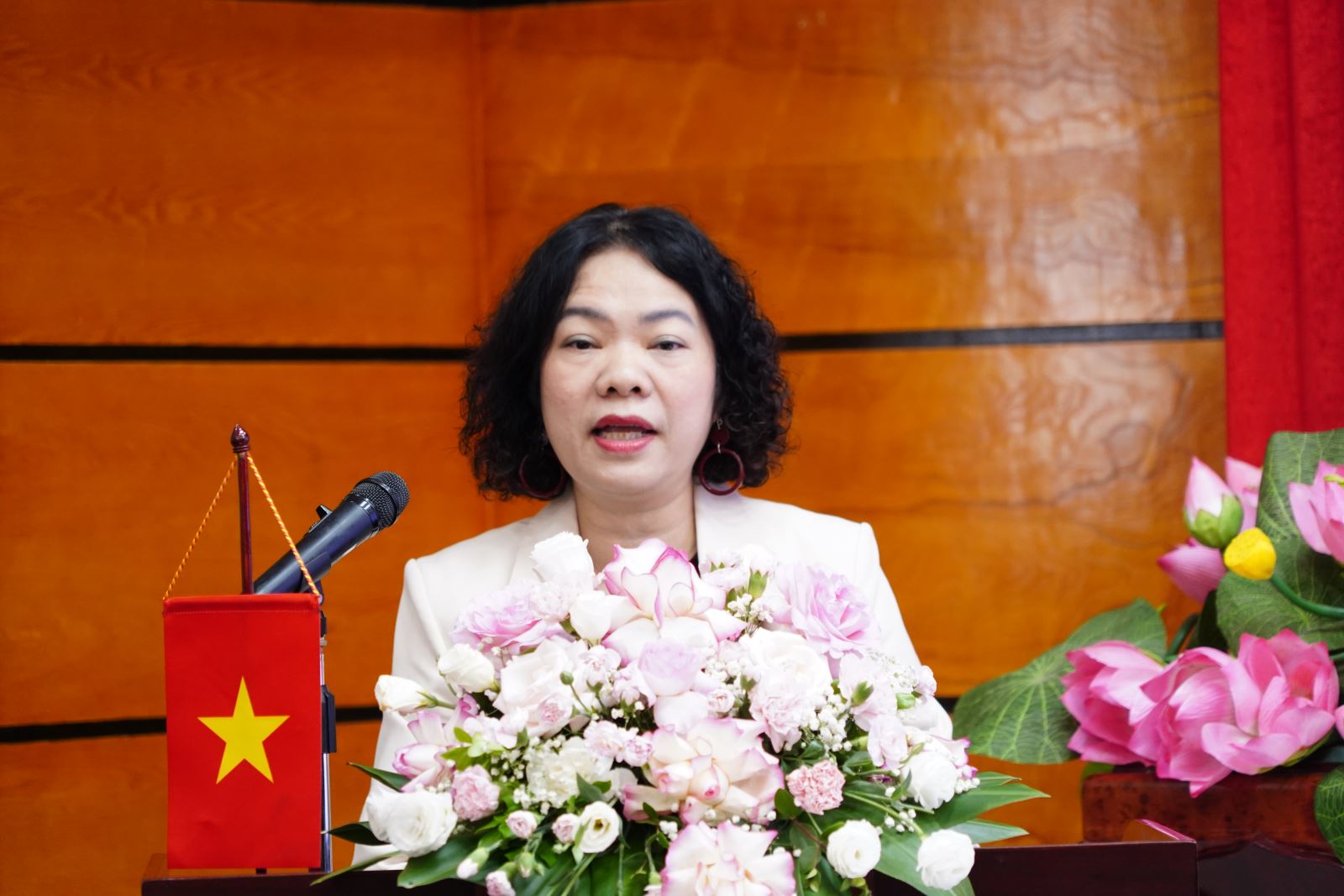
Assoc. Prof. Dr. Nguyen Thi Thanh Hai, Chief Advisor to UNDP in Viet Nam, speaks at the event.
During the ceremony, a representative of the Faculty of Civil Law introduced the course “Gender and Gender Equality in Policy and Law”. Designed as an elective course for undergraduate students, it provides knowledge and skills in gender analysis, gender impact assessment, gender mainstreaming and gender-responsive budgeting in the development and implementation of policies and laws. Students who participated in the pilot course also shared their learning experiences and impressions, providing feedback for further improvements to the course content and teaching methods.
Representatives of the students highlighted the innovative and practical nature of the course content and the diversity of teaching methods. They noted that the course not only enhanced their awareness of gender, gender stereotypes and substantive gender equality but also equipped them with skills in gender mainstreaming and in approaching and analyzing legal issues from a gender perspective, in line with the demands of international integration.
Students also suggested expanding the range of academic materials, statistical data and surveys disaggregated by sex, and considering an appropriate teaching duration. They expressed the hope that the course would continue to receive support from the University and its partners, thereby spreading positive values of gender equality throughout the student community and society.

A student representative shares learning experiences from the pilot course.
The University’s leadership, representatives of the EU and UNDP, and other delegates then took part in the official launch ceremony of the course “Gender and Gender Equality in Policy and Law”.
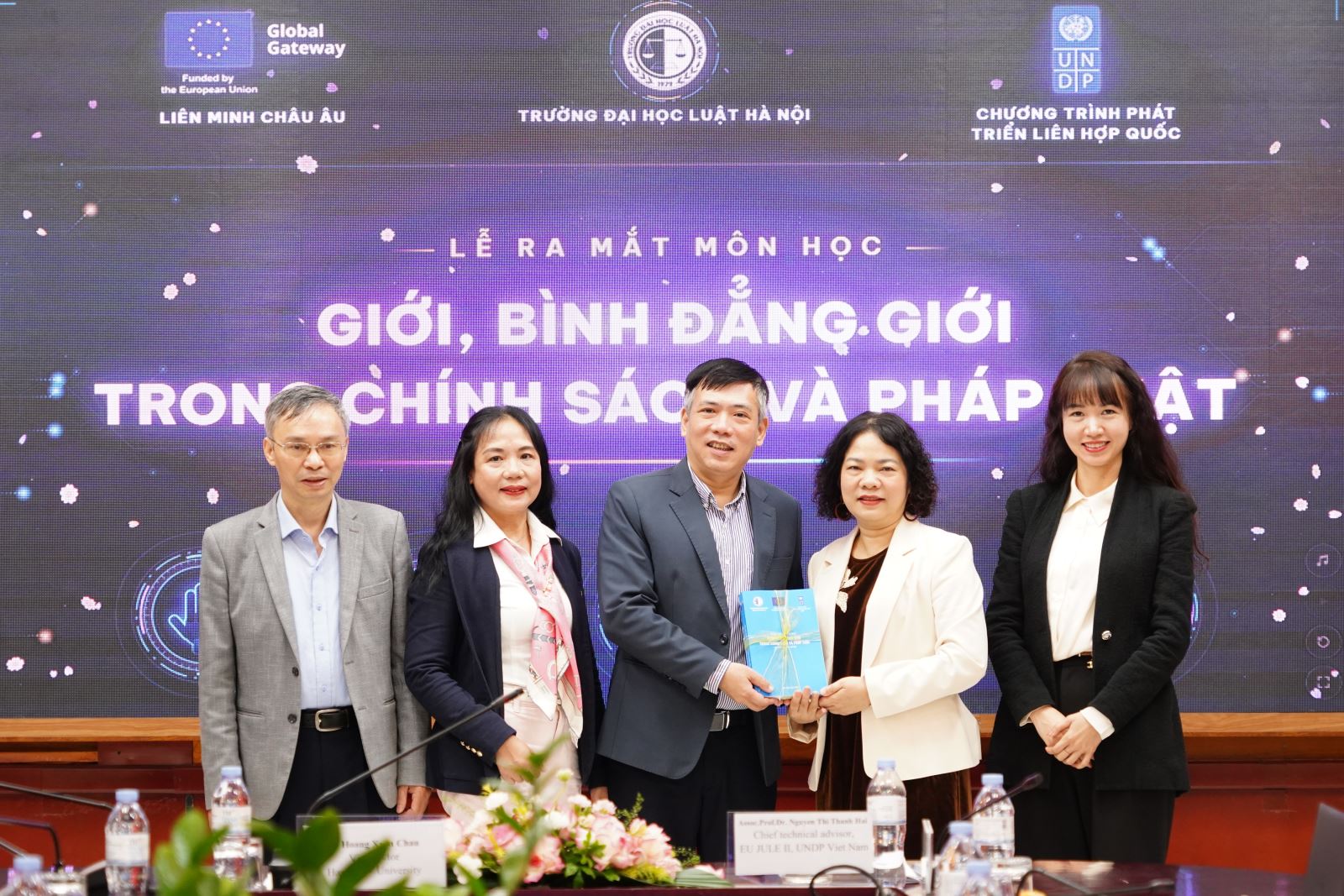
University leaders, representatives of UNDP in Viet Nam and other delegates participate in the official course launch ceremony.
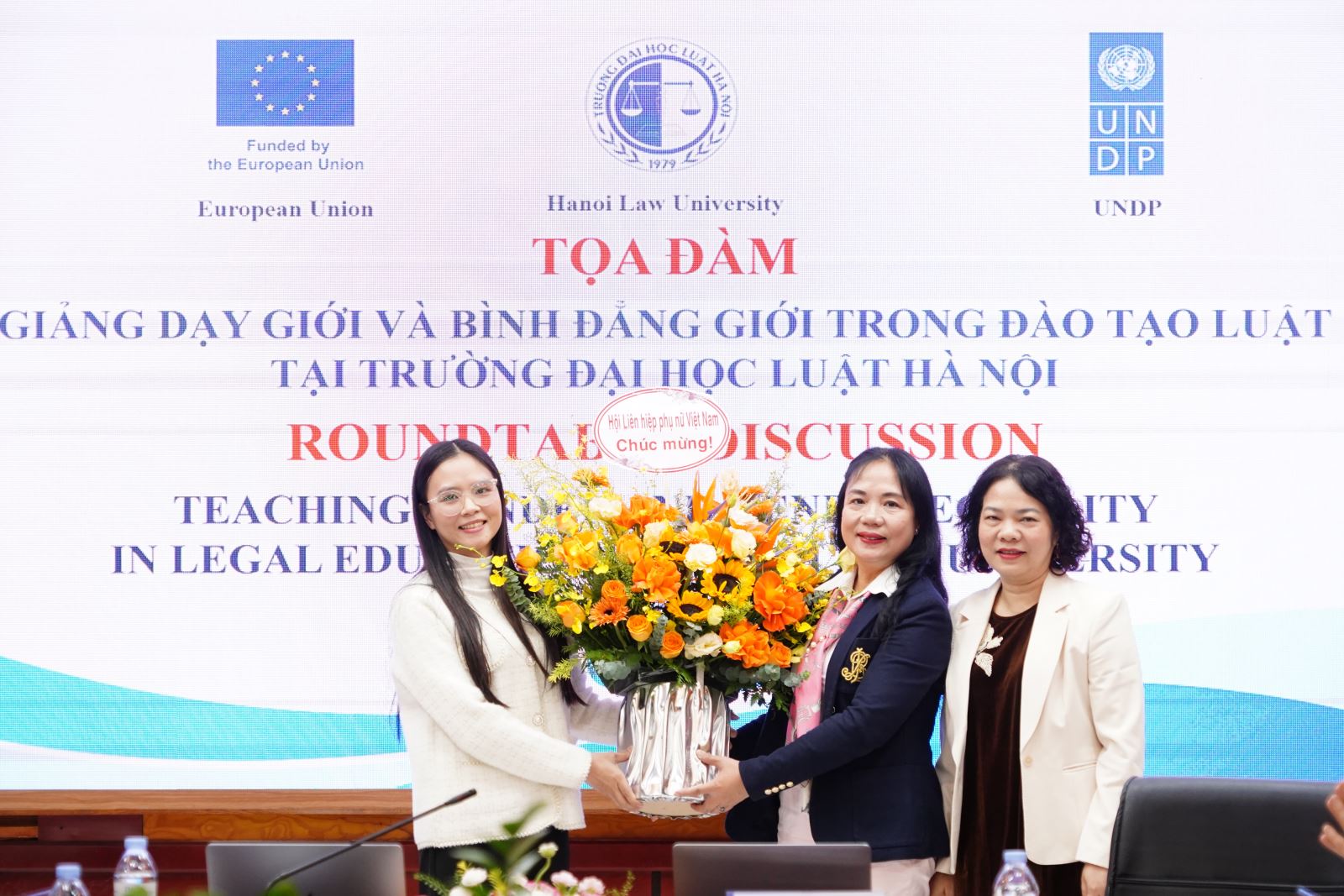
Representatives of UNDP in Viet Nam present flowers to congratulate the University on the launch of the course.
Following the launch ceremony, the seminar on teaching gender and gender equality in legal education featured two presentations. The first, delivered by Dr. Bui Minh Hong, Head of the Department of Marriage and Family Law, addressed “Experience and Practices in Teaching Gender and Gender Equality in Legal Education at Selected Higher Education Institutions in Viet Nam”. The second, presented by Assoc. Prof. Dr. Nguyen Thi Lan, Deputy Dean of the Faculty of Civil Law, focused on “The Integration of Gender and Gender Equality into the Curriculum and Law Courses at Hanoi Law University”.
During the seminar, delegates discussed methods of integrating gender perspectives into law courses, practical experience in ensuring gender equality in the development, application and enforcement of laws, and the role of legal education and training in promoting gender equality.
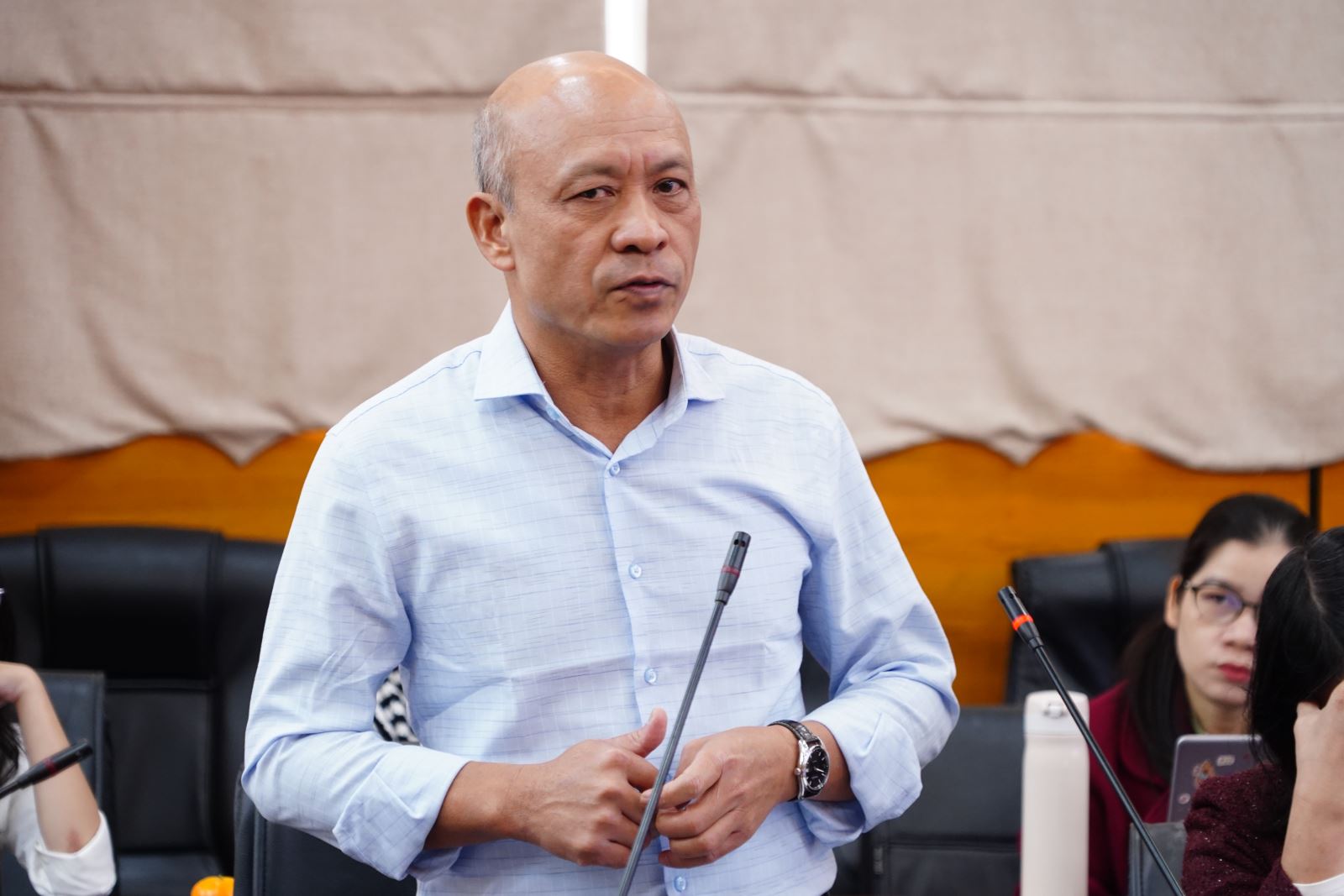
Dr. Bui Minh Hong, Head of the Department of Marriage and Family Law, delivers a presentation at the seminar.
Assoc. Prof. Dr. Nguyen Thi Lan, Deputy Dean of the Faculty of Civil Law, delivers a presentation at the seminar.
The course launch and seminar represent a significant milestone in Hanoi Law University’s efforts to renew and improve the quality of legal education and strengthen international cooperation. They contribute to developing legal professionals with strong expertise, progressive thinking and social responsibility, capable of meeting the requirements of building a rule-of-law state and advancing gender equality.