Date posted:
23/04/2026
19
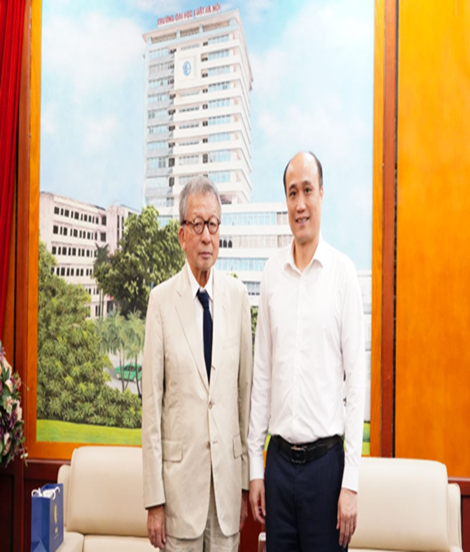
| Read the article |Hanoi Law University formally announces that Dr. Masanori AIKYO has officially joined the University's Science and Training Council for the 2025–2030 term. The participation of an internationally renowned scholar like Dr. Masanori AIKYO is expected to actively contribute to enhancing the quality of education, scientific research, and expanding the University's international cooperation.
 |
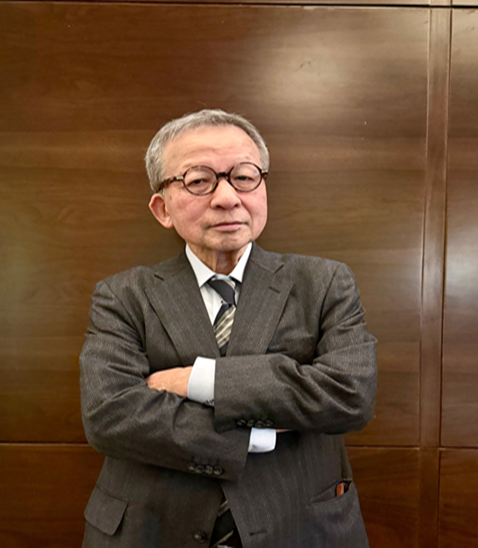 |
Throughout his career, Dr. Masanori Aikyo has held many important academic and administrative positions at Nagoya University, including: Professor of the Graduate School of Law, Director of the Center for Asian Legal Exchange, Dean of the Graduate School of Law (2010–2012), and Vice President (2012–2015). Following this, he served as the Chairperson of the Aichi Prefectural Public University Corporation from 2015 to 2022. He is currently an Advisor and Professor Emeritus of Nagoya University. In 2022, he was awarded an Honorary Doctorate by Hanoi Law University in recognition of his significant contributions to the legal field and international academic cooperation.
His participation in the Science and Training Council is considered a major step forward, contributing to the enhancement of academic advisory capabilities, promoting innovation in education and scientific research, and concurrently strengthening the position and prestige of Hanoi Law University on both a regional and international scale.
The Science and Training Council of Hanoi Law University, established by the Rector, is a strategic advisory body for the academic and educational development of the University. The Council functions to advise on professional expertise, training orientations, educational quality assurance, science and technology development, faculty building, promoting international cooperation, and ensuring academic integrity.
The main activities of the Council include:
Advising on academic development orientations and training programs;
Proposing solutions to improve the quality of education;
Promoting scientific research and innovation activities;
Contributing to the development of teaching staff and scientists;
Strengthening international cooperation and ensuring academic integrity standards.
The Council operates for the 2025–2030 term, corresponding to the term of the Rector. During its operation, the Council works on a collective principle, ensuring objectivity and responsibility in its advisory opinions. The Council's conclusions are passed when more than 50% of the total members are in consensus and are accountable to the Rector.
The operational methods of the Council are implemented flexibly through in-person, online, or hybrid meetings. In necessary cases or under the direction of the Chairman of the Council, gathering opinions can be conducted in writing or via electronic means to ensure efficiency and timeliness in advisory work.